Online shopping saves time, and most orders arrive without any trouble. But it is also one of the easiest places for scammers to reach you. A fake shop, a deal that looks too good, or a message about a “delivery problem” can cost real money in just a few clicks.
The good news: a short checklist, used every time you order, blocks most scams. This guide walks through it: before you buy, while you pay, and after your order arrives.
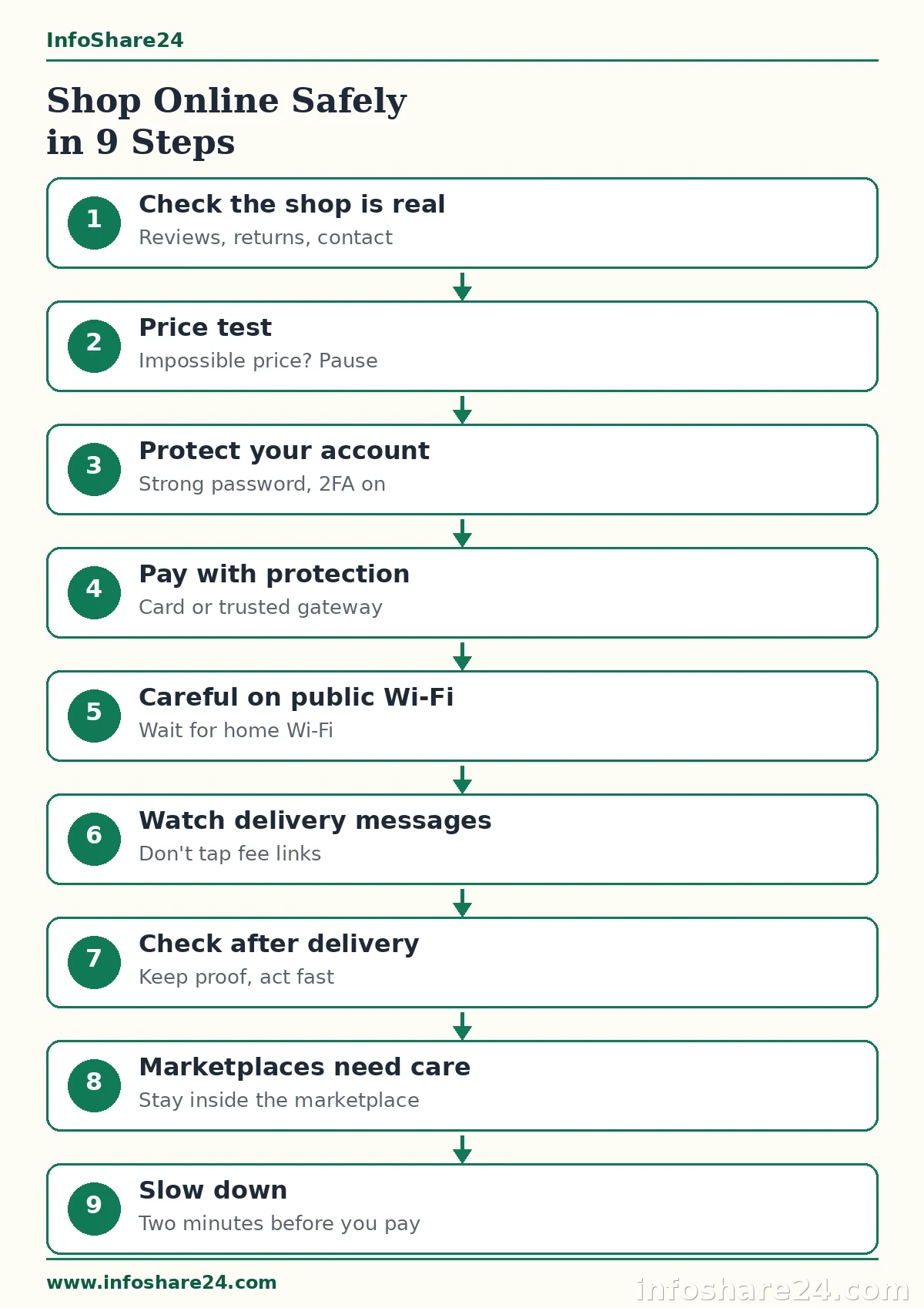
Before You Buy: Check the Shop Is Real
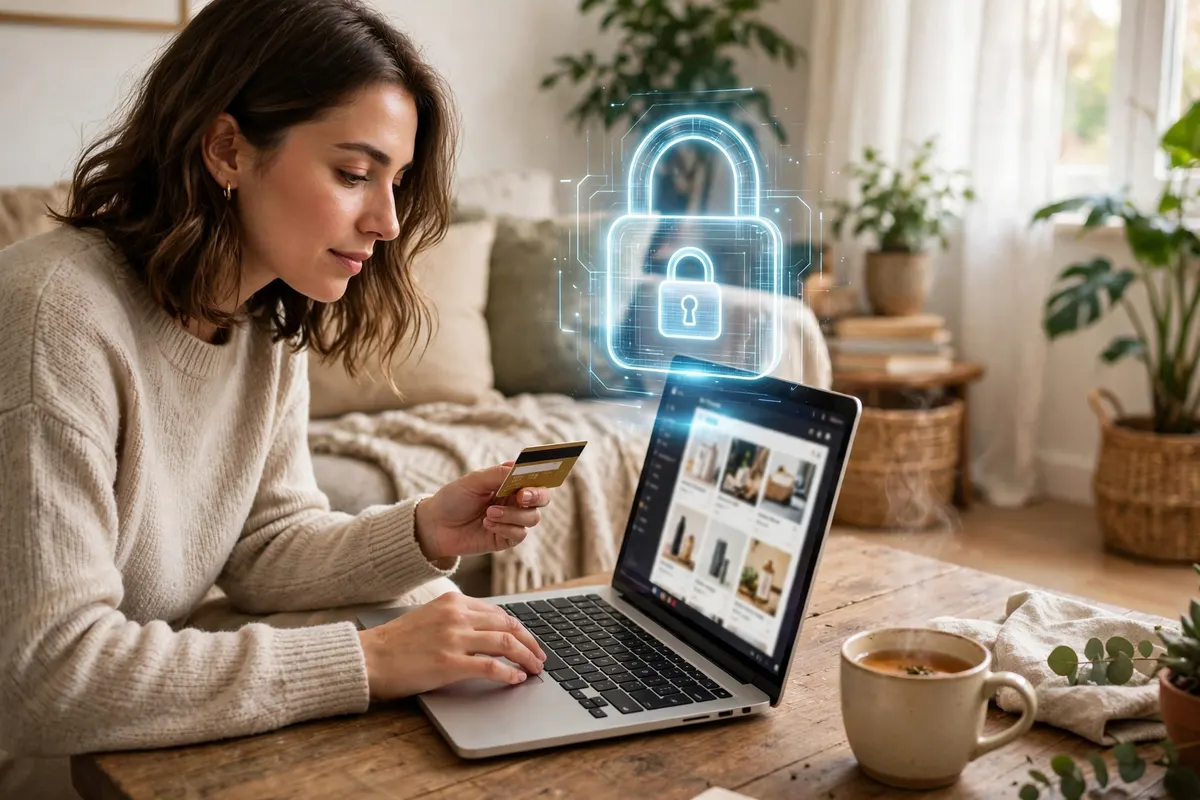
- This is the most important step, especially when you find a shop through an advert on social media. A genuine shop usually has a proper website, a clear returns policy, a contact page with real details, and customer reviews spread over months, not a handful of glowing reviews all posted on the same day.
- Search for the shop’s name together with “review” or “scam”. Repeated complaints about orders never arriving, or a shop that exists only inside its own adverts, are warning signs.
- Also check the website address: scammers copy well-known shops with one small change, such as an extra letter. When you can, type the address yourself instead of tapping an advert link. A padlock and “https” mean the connection is encrypted, but not that the shop is honest.
The Price Test: If It Looks Impossible, Pause
- A popular phone, branded trainers, or a new gadget selling for a tiny fraction of its normal price should make you stop and think. Scammers use impossible prices to rush you into paying before you check anything else.
- Compare the price with two or three well-known shops. A small discount may be genuine; a huge discount on an unknown shop is very likely a scam or a fake product. A bargain is not a bargain if the order never arrives.
- Watch out for pressure tactics too: countdown timers, “only 2 left” warnings, and messages telling you to pay now or lose the deal. A legitimate shop lets you check and come back later.
Protect Your Account Before You Shop
- Your shopping account holds your name, address, and sometimes saved payment details, so treat it like your email account. Use a strong, unique password for each shopping site, never reused from email or banking.
- If a shop offers two-factor authentication, switch it on, so a stolen password alone is not enough.
- Avoid saving your card on a shop you will only use once. For shops you trust and use regularly, saving a card is reasonable, provided your account itself is well protected. Our guide to creating a strong password you can actually remember explains a simple method that works for shopping accounts too.
Pay in a Way That Protects You
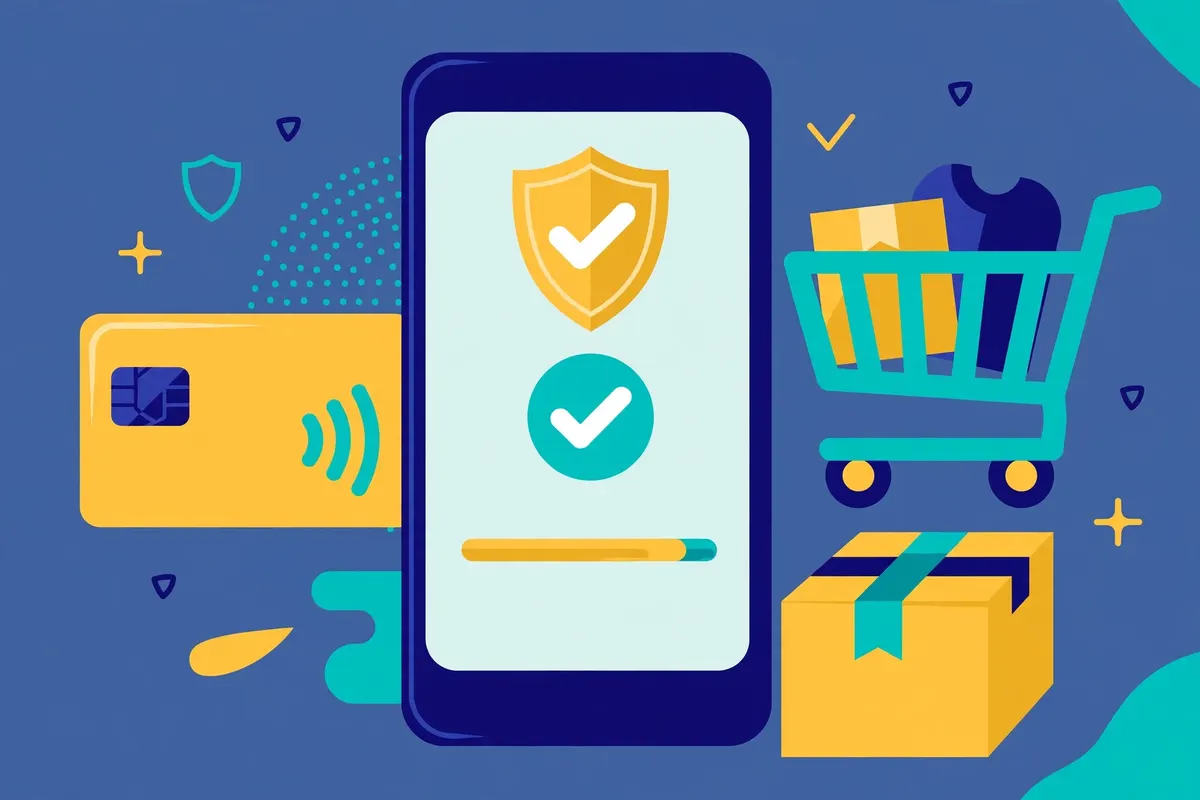
- How you pay matters more than almost anything else, because it decides whether you can get your money back when something goes wrong. Choose a payment method with buyer protection whenever you can: a credit card, a debit card through a trusted payment gateway, or a well-known payment service that offers dispute resolution.
- Avoid direct bank transfers, gift cards, cryptocurrency, or payment to a personal account, especially for an unknown shop. Those methods are very hard to reverse, which is why scammers prefer them.
- Never enter card details on a site reached through a message link without checking the address first. A real shop will never ask for your card PIN, bank password, or a one-time code from your phone. If a checkout page asks for any of those, close it.
Be Careful on Public Wi-Fi
- Cafe, airport, or hotel Wi-Fi adds risk, because you cannot always tell whether the network is safe.
- If you can, wait until you are on home Wi-Fi or mobile data before entering payment details.
- If you must shop while out, use the shop’s official app rather than a message link, and keep your device updated. Our guide to staying safe on public Wi-Fi explains these steps in more detail.
Watch Out for Delivery Messages
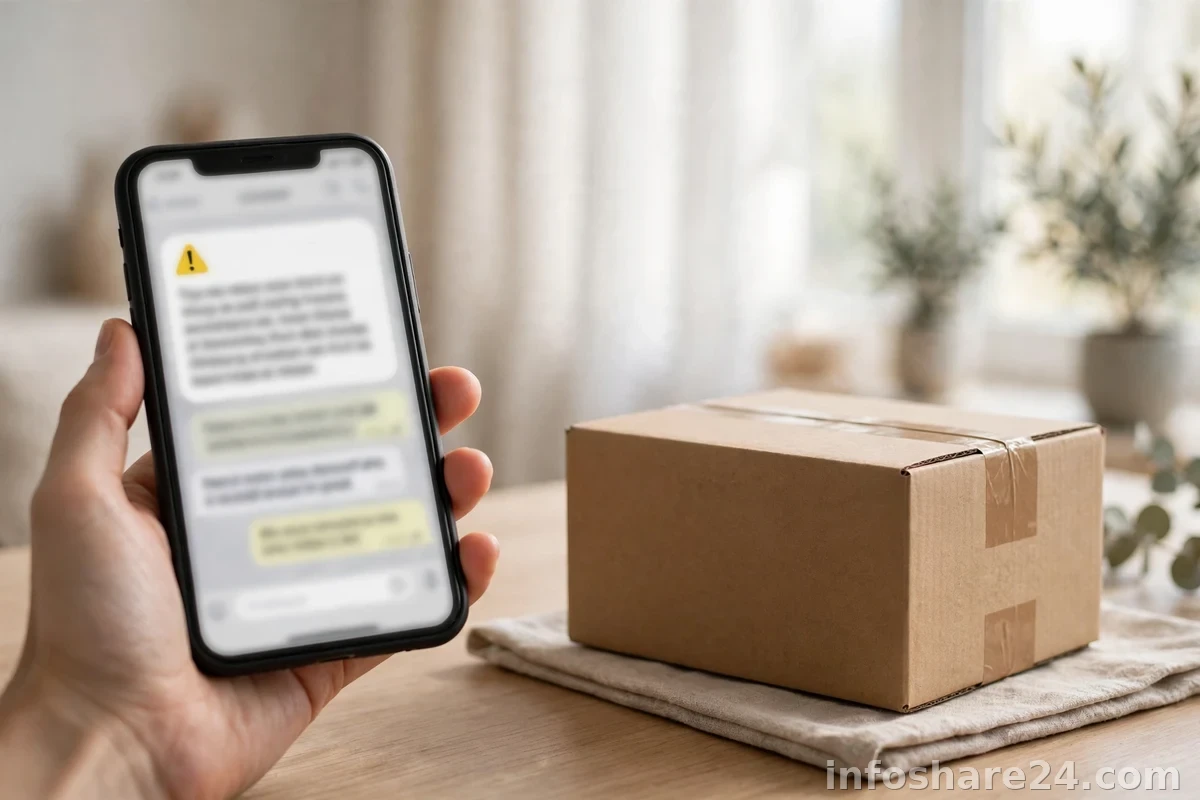
- The risk does not end when you place the order. Afterwards, you may receive messages about a delivery problem, an extra fee, or a package held at customs. Many of these are phishing messages, even when they mention a real order or a real delivery company.
- A genuine delivery company will not ask you to pay a small fee through an unknown link to release a parcel, nor ask for your bank password or card details by text or email.
- If you receive such a message, do not tap the link. Instead, check the order status in the shop’s official app or the delivery company’s tracking page. The same warning signs explained in our guide to spotting a phishing message in 30 seconds apply to delivery scams too.
After Delivery: Check Quickly and Keep Proof
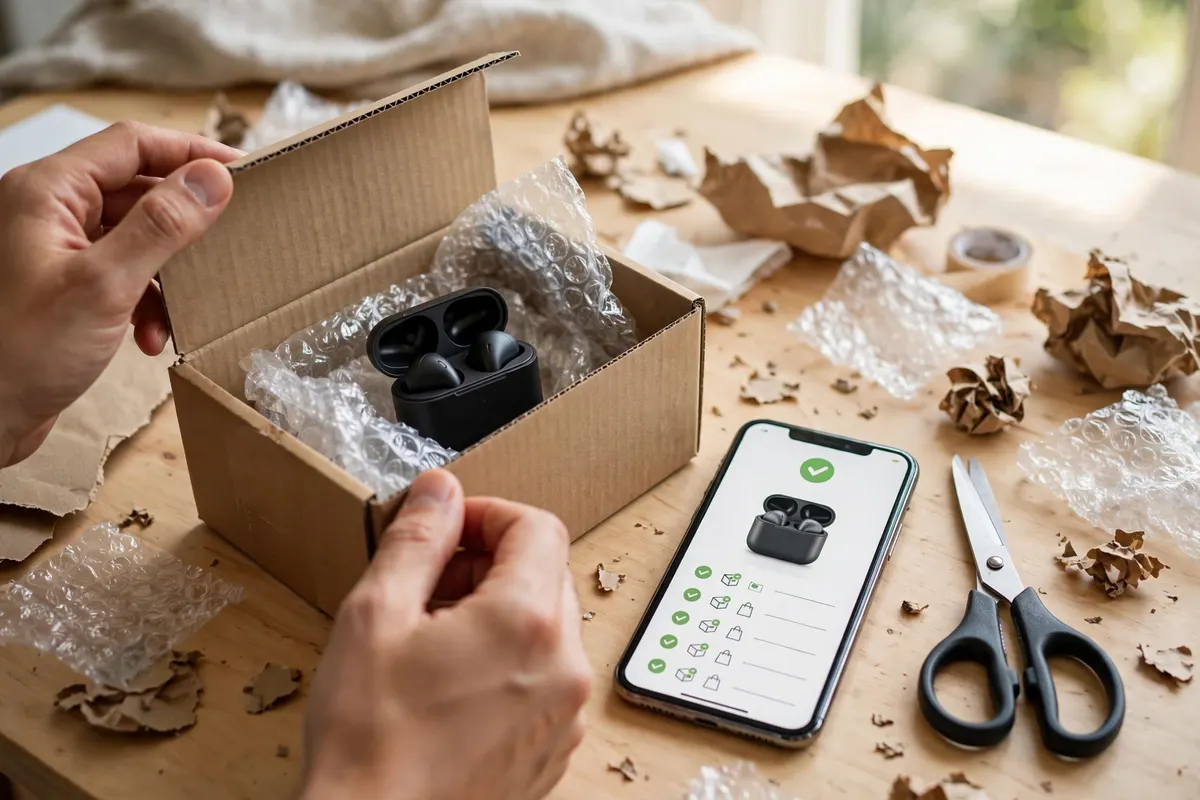
- When your parcel arrives, check it promptly. Is it the right item, in the right size and colour, and does it work as described? If it is wrong, damaged, or clearly fake, take photos straight away, keep the packaging, and contact the shop through its official support channel, not through a link in a message.
- Keep your proof together: order confirmation, payment receipt, tracking details, and messages with the shop.
- If the shop does not respond or refuses a fair return, contact your payment provider or bank quickly about a dispute or chargeback. Most protections have time limits, so acting within days matters. An honest review afterwards also helps other shoppers.
Extra Care for Marketplaces and Social Media Shops
- Marketplaces and social media sellers need a closer look. Check the seller’s history: how long have they sold, how many reviews do they have, and do those reviews sound real and specific, rather than short, identical praise?
- For local pickups, meet in a safe, public place. For unseen items, prefer a protected payment method over cash or direct transfer. Digital goods such as accounts or codes deserve extra caution: they are harder to return and easier to fake.
- If a seller pressures you to leave the marketplace, move to a private chat, and pay directly, that is a warning sign. Marketplace protection usually only applies when you stay inside the marketplace and pay through it.
Common Mistakes to Avoid
- Most shopping problems come from small mistakes: shopping while rushed, clicking adverts without checking the shop, or ignoring a parcel for weeks.
- The fix is simple: slow down for two minutes before you pay.
- Check the shop, the price, the payment method, and the link.
Frequently Asked Questions
Is cash on delivery safer than paying online? Cash on delivery can be safer for unknown shops, because you pay only when the item arrives. Check the item before paying if allowed, and keep the receipt. It does not protect you against a fake item, so still check the shop first.
What should I do if I already paid a scammer? Contact your bank or payment provider immediately. They may be able to stop or reverse the payment, especially for card payments. Report the shop to the marketplace and your bank, and keep all proof, including screenshots.
Are all cheap shops scams? No. Genuine sales, clearance items, and small local shops can be cheap. The warning sign is a combination: unknown shop, dramatically low price, pressure to pay quickly, and no payment protection. One factor alone is not proof, but several together should make you pause.
Conclusion
Safe online shopping comes down to a short checklist: check the shop, question impossible prices, protect your account, pay with protection, ignore delivery fee links, and check your order and keep proof. Shop smart, not fast.