AI chatbots can write a smooth, confident answer in seconds. That confidence is exactly why you need to pause before you trust it. An AI tool does not browse the world the way you do, and it does not know when it is guessing. Sometimes it invents a fact, a quote, a date, or a link that looks real but simply does not exist. Experts call these mistakes hallucinations, but for an ordinary reader the name does not matter. What matters is this: a well-written answer is not the same as a true answer.
Start by Asking: Does This Answer Make Sense?

Your common sense is your first checking tool. Read the answer once, slowly, and ask yourself a few plain questions. Does it match what you already know? Does it contradict itself halfway through? Does it sound too perfect, too vague, or too detailed for the question you asked?
Watch for warning signs. If the answer gives very precise numbers but no source, be careful. If it claims a famous person said something surprising, be careful. If it mixes up two similar topics, for example two countries, two medicines, or two historical events, that is a sign it may have blended its information. AI tools are good at language, so a confused answer can still read beautifully.
Check the Sources, Not Just the Answer
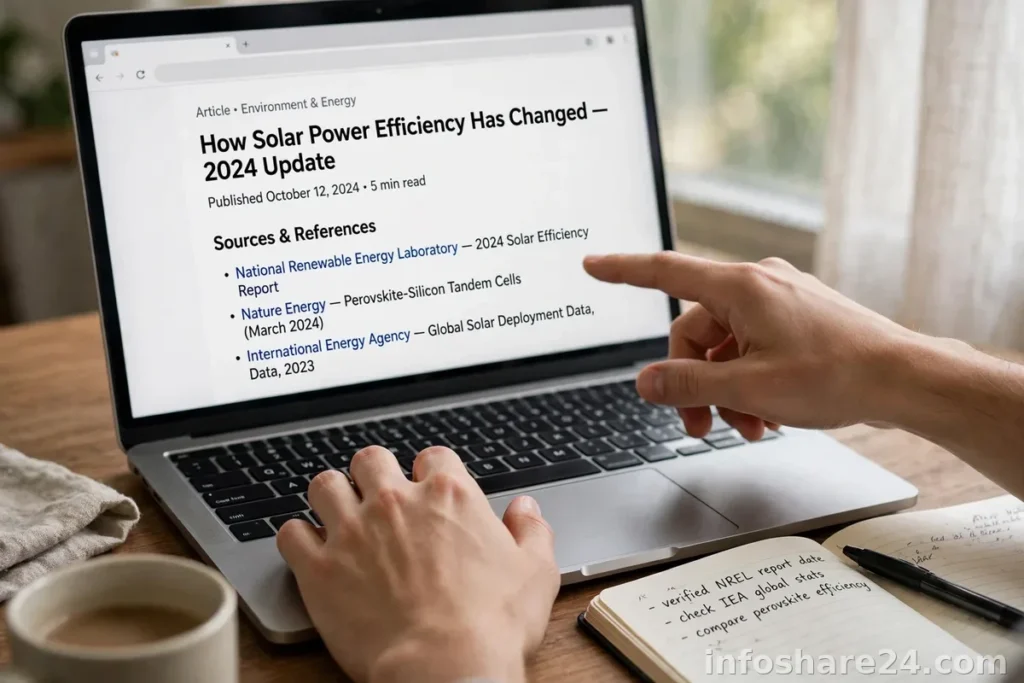
A source is where a fact comes from: an official website, a news report, a textbook, a government page, or a research paper. The stronger the source, the more you can trust the fact. A claim copied from a random blog post is weaker than the same claim on the official site of the company, university, or government body involved.
When an AI answer includes links, click at least one or two of them. Do they open? Do they actually say what the chatbot claimed? Sometimes a link is real but the page says something different, or the page is years old and the facts have changed. If a link does not work at all, that is a serious warning sign, because it may have been invented.
When there are no links, do a quick search yourself. Type the key claim into a search engine, in your own words, and see what trusted sites say. If two or three independent, reliable sources agree, the claim is much safer. If you can only find the same claim repeated on low-quality sites, or you cannot find it anywhere, do not share it as fact. Good prompting helps here too, because a clear question usually produces a clearer, more checkable answer, as explained in How to Write Better Prompts for AI Chatbots: A Beginner’s Guide.
Recheck Numbers, Quotes and Dates Yourself

Numbers, quotes, and dates are where AI answers go wrong most often. A chatbot may give you the right idea but the wrong year, the wrong percentage, or a quote nobody actually said. These errors are hard to spot because the rest of the answer looks correct.
For quotes, search the exact words in quotation marks. If a famous person really said it, you will usually find the quote on a reputable news or biography site. If the only results are social media posts and quote-collection pages with no source, be doubtful. For dates, check an official timeline, a museum page, or an encyclopaedia entry. A date that is out by even one year can change the meaning of a historical claim completely.
Compare with a Second Source
One of the fastest accuracy checks is also the simplest: ask a second source. That can mean a second chatbot, but it is much better if it means a different kind of source, such as a trusted website, a book, or an expert article. If two independent sources agree, your confidence should rise. If they disagree, you have found something worth investigating, not a reason to pick the answer you like best.
Be Extra Careful with Health, Money and Legal Answers

Some topics carry real risk if the answer is wrong. Health advice is the clearest example. An AI chatbot can explain a condition in general terms, but it does not know your medical history, your medicines, or your symptoms in full. Never change a medicine, start a treatment, or ignore a serious symptom because a chatbot told you to. Use AI answers as background reading, then check with a doctor, pharmacist, or official health site.
The same caution applies to money and legal questions. Tax rules, visa rules, loan terms, and tenancy laws change often and differ by country. An answer that was correct last year, or correct in another country, may be wrong for you today. For money decisions, check your bank, a licensed adviser, or an official government page. For legal questions, check the actual law or speak to a qualified professional. In these areas, an AI answer is a starting point for questions, never the final decision.
A Simple 5-Minute Accuracy Checklist
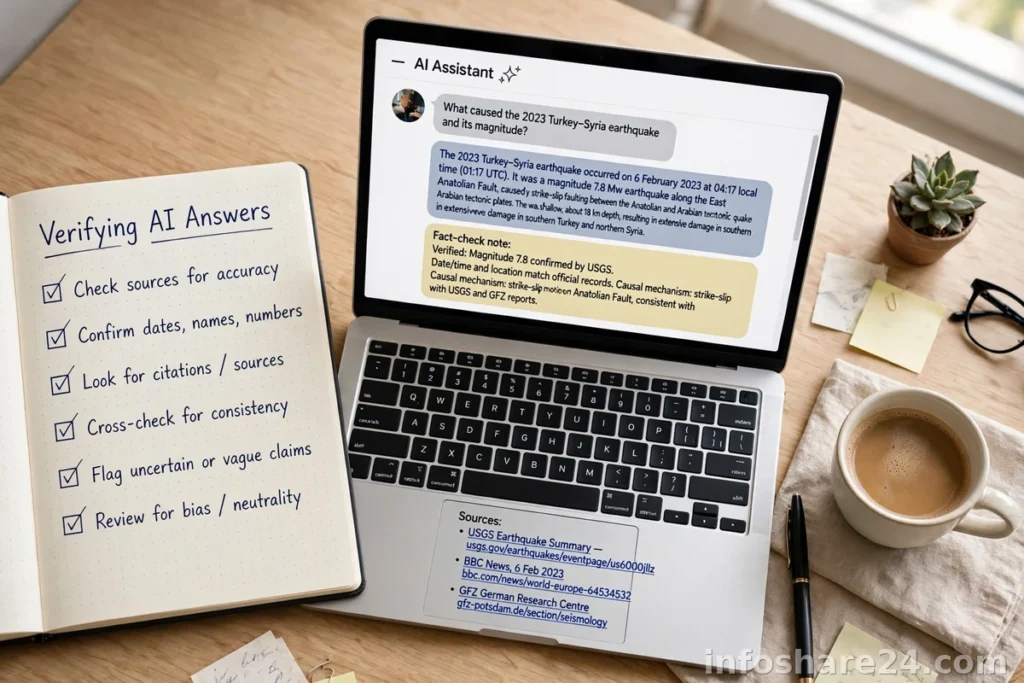
You do not need to spend an hour checking every answer. For most everyday questions, five minutes is enough.
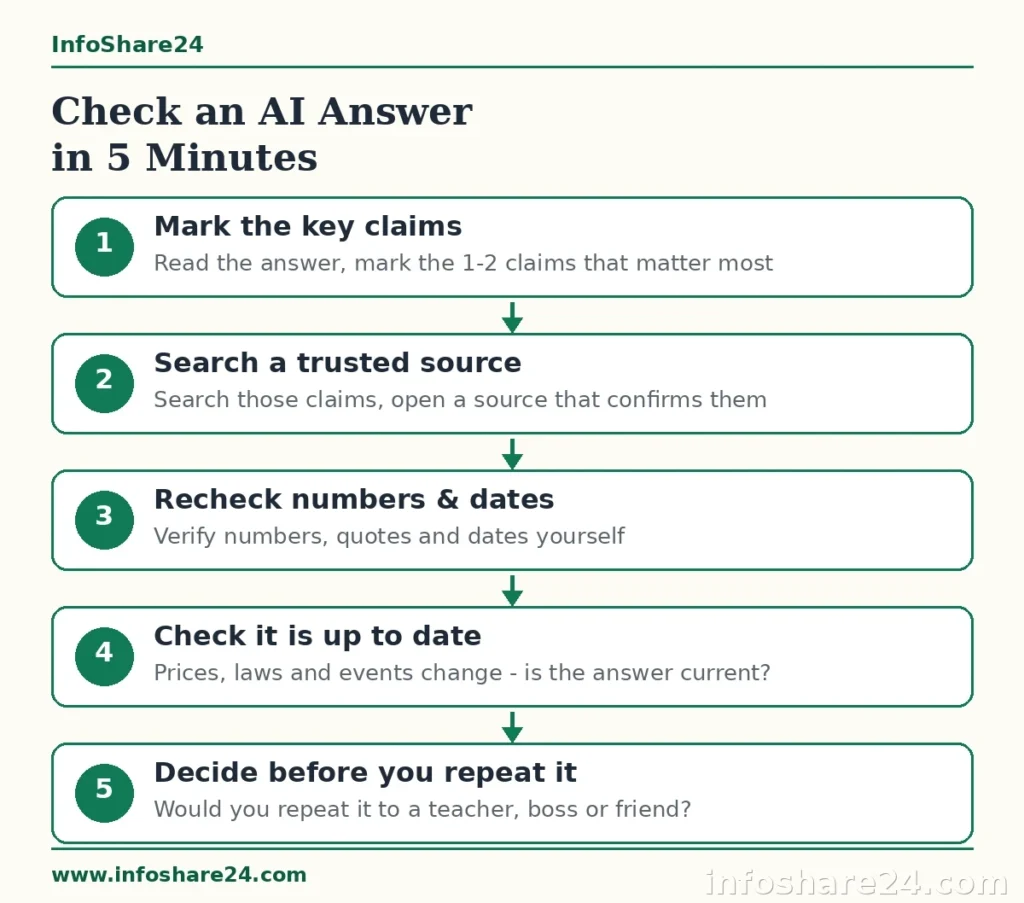
- Read the answer and mark the one or two claims that matter most.
- Search those claims and open a trusted source that confirms or corrects them.
- Recheck any numbers, quotes, or dates yourself.
- Ask whether the answer is up to date, because prices, laws, and events change.
- Decide: would you be comfortable repeating this claim to a teacher, a boss, or a friend? If not, keep checking or leave it out.
Frequently Asked Questions
Why do AI chatbots sometimes give wrong answers so confidently?
Chatbots are trained to produce fluent, likely-sounding text, not to look facts up like a librarian. When they lack a fact, they may fill the gap with a plausible guess, and that guess still sounds confident because the language is smooth.
Is an AI answer with links always trustworthy?
No. Links can be invented, outdated, or unrelated to the claim. Always click the link and check that the page really supports what the chatbot said.
How can I check whether a quote is real?
Search the exact words in quotation marks on a search engine. Real quotes from well-known people usually appear on reputable news, biography, or official sites. If you cannot find a reliable source, do not treat the quote as real.
Should I use AI answers for homework?
You can use them to understand a topic, plan your work, and practise explaining ideas, but always verify the facts with your textbook or a trusted source before you submit anything. Your teacher will check your facts, so you should check them first.
What should I do if two sources disagree?
Trust the more authoritative and more recent source, such as an official site or a professional body, and note the disagreement if it matters. If the topic affects your health, money, or legal rights, ask a qualified human expert.
Conclusion
AI tools are fast, helpful, and often right, but “often right” is not the same as “always trustworthy.” Check the claims that matter, open the sources, recheck numbers, quotes, and dates, and be extra careful with health, money, and legal answers. With a simple five-minute checklist, you can enjoy the speed of AI without passing on its mistakes. For clearer questions that are easier to check, see AI for Students: Study Notes and Research the Smart Way. The best habit is a simple one: trust, but verify first.