A shocking message arrives in your family WhatsApp group. A dramatic video spreads on Facebook. Everyone is sharing it, so it must be true — right? Not necessarily. Fake news spreads fastest precisely because it is shocking, emotional, and easy to forward. On WhatsApp and Facebook, a false claim can reach thousands of people before anyone checks it.
The good news is that spotting fake news is a skill, and it is easier than you think. You do not need special software or expert knowledge. This guide gives you simple checks you can use in under a minute: reading forwarded labels, checking the source, verifying photos, and pausing before you share.
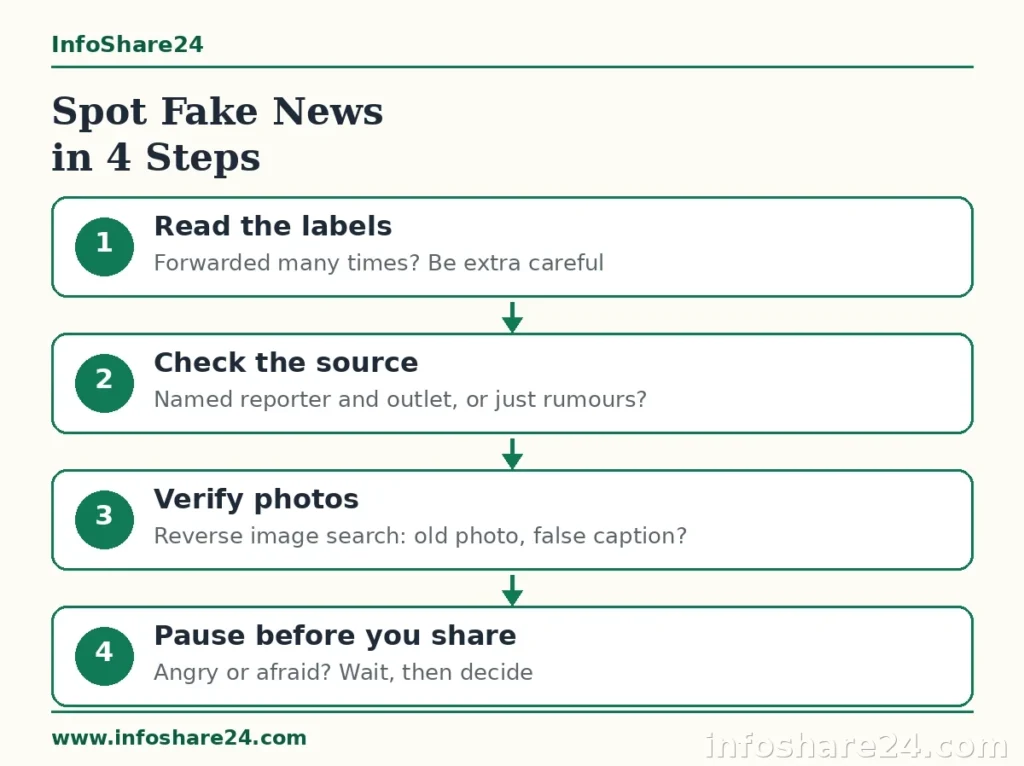
Read the Labels: Forwarded Is a Warning
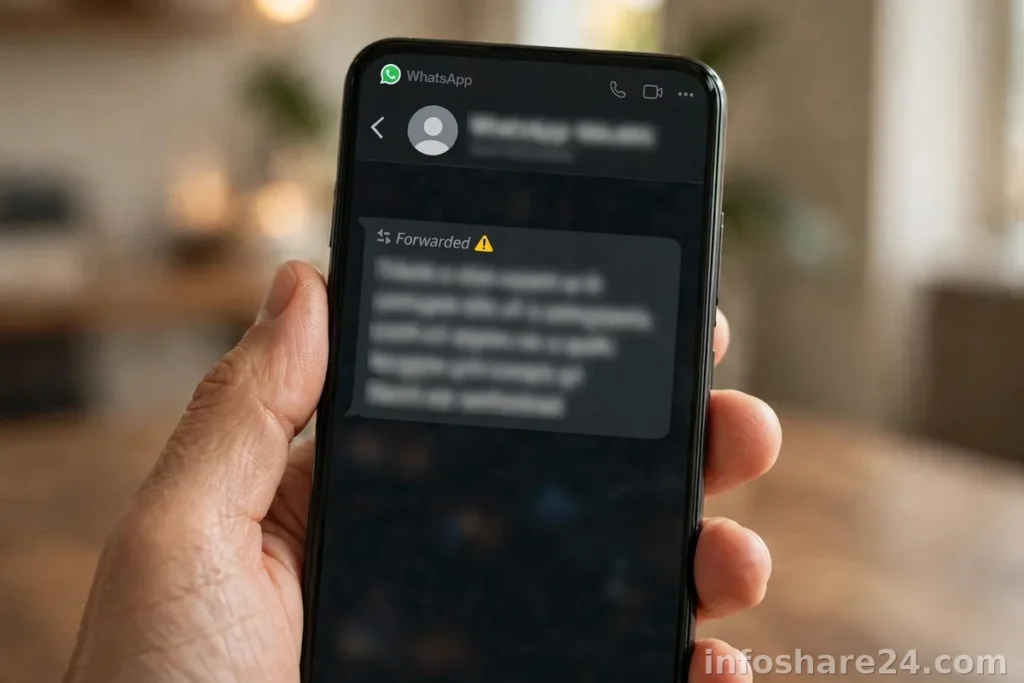
WhatsApp now labels messages to help you. A message marked “Forwarded” was passed on from another chat. One marked “Forwarded many times” has travelled through at least five chats, which means the original sender is far away and the claim has had many chances to change along the way. Neither label proves a message is false, but both mean you should be more careful, not less.
Think of a forwarded message like a rumour passed from person to person in a long line. Each person may add a detail, drop a detail, or misunderstand something. By the time it reaches you, the story may look very different from the original event. If a message has been forwarded many times and contains no link to an original source, treat it as unverified, no matter who sent it to you.
Check the Source Before You Believe It

The source is the most important check of all. A real news story can usually be traced to a named reporter, a named news organisation, and a published article you can open and read. A fake story often has none of these. It may say “according to reports” without naming any report, or “scientists say” without naming any scientist or study.
When a WhatsApp message makes a big claim, search for it yourself. Type the key words into a search engine and see what comes up. If established newspapers, television channels, or official government pages report the same story, it is much more likely to be true. If the only results are unknown blogs, social media posts, or pages full of adverts, be doubtful.
Photos and Videos Can Lie Too

A photo feels like proof, but photos are easy to misuse. A real photo from an old event, a different country, or even a film scene can be shared with a new, false caption. The image itself is genuine; the story attached to it is not. Videos can be edited in the same way, with clips cut, reordered, or given a misleading title.
You can check a suspicious image with a reverse image search:
- Open a search engine’s image search on your phone.
- Upload or paste the image and see where else it has appeared.
- If the same photo appears in older articles about a different event, you have your answer: the current caption is false.
Even without a search, look for clues in the image itself, such as old-style clothing, number plates, signs in another language, or weather that does not match the claimed date and place.
If It Makes You Angry or Afraid, Pause

Fake news is designed to trigger a strong emotion. Anger, fear, shock, and disgust all make people share quickly, before they think. If a post makes you feel instantly furious or frightened, that feeling is itself a clue. Real news can be upsetting too, of course, but fake news relies on emotion as its main engine.
So build a pause into your habit. When a message provokes a strong reaction, wait before forwarding it. Read it again slowly. Ask: who benefits if I share this? Does it ask me to act urgently, to distrust a whole group of people, or to send money or personal details? Urgency, fear, and requests for money are classic signs of a scam as well as of fake news. False prize and job claims use the same tricks, which is why the warning signs overlap with those in How to Recognise Fake Job Offers and Lottery Scams Online.
What to Do When You Are Not Sure
Being unsure is not a failure; it is the correct response to an unverified claim. The safest action is simple: do not forward it. Not sharing is not the same as saying a story is false. It simply means you have not verified it yet, and you refuse to spread something that might mislead others.
If the claim matters, verify it in a few minutes:
- Search the key claim on a search engine.
- Check a trusted news site or an official source.
- Try a reverse image search for any photo.
Fact-checking websites also exist for major claims, and they explain their evidence step by step. If you cannot verify the claim after a quick search, say so honestly to anyone who asks: “I saw this, but I could not confirm it.” That honesty stops a rumour more effectively than an argument.
If you discover that something you shared was false, correct it. Send a short follow-up in the same group: “I shared this earlier, but it turns out it is not accurate, here is the correct information.” People respect a correction far more than silence, and it helps stop the false version from spreading further.
Teach Your Family the Same Checks
Fake news spreads through families because we trust messages from people we love. That trust is a strength, but it means a false claim from a relative feels more believable than the same claim from a stranger. Share these checks with your family in a friendly way, not as a lecture. A short message like “Before we forward news, let’s check the source together” works better than criticising anyone for sharing.
Frequently Asked Questions
Does “Forwarded many times” mean a message is definitely fake?
No, but it means the message has passed through many hands and its origin is unclear. Treat it as unverified and check the claim before believing or sharing it.
Can I trust a news story if many people share it?
Not on its own. Popularity is not proof. Many people can share the same false story, especially if it is emotional. Check whether trusted news outlets or official sources report it too.
How do I reverse image search on my phone?
Open your browser, go to an image search engine, and use the camera or upload option to search with the image. If the same photo appears in older articles about a different event, the new caption is likely false.
What should I do if a family member keeps sharing fake news?
Stay polite and share the correct information with a trusted source link, without blaming them. Suggest the family rule of checking before sharing, and mute the chat if the volume becomes too much.
Should I report fake news on Facebook?
Yes. Use the report option on the post and choose the reason that fits, such as false information. Reporting helps the platform reduce the post’s reach, even if it does not remove it instantly.
Conclusion
Fake news thrives on speed, emotion, and trust. Slow it down with a few simple habits: notice forwarded labels, check the source, verify photos, pause when a post makes you angry or afraid, and never forward a claim you have not checked. If you are unsure, do not share — and if you shared something wrong, correct it openly. Every person who checks before sharing makes WhatsApp and Facebook a little safer for everyone else. Similar message checks are covered in How to Spot a Phishing Message in 30 Seconds.