A message arrives out of nowhere: you have won a lottery you never entered, or been selected for a high-paying job you never applied for. That excitement is exactly what the scammer is counting on. Fake job offers and lottery scams follow a similar pattern: a wonderful promise, a little pressure, and then a request for money or personal details.
Once you know that pattern, these scams become much easier to spot. Just slow down, check a few simple things, and remember: never pay a fee to get a job or a prize, and never share your bank details or verification codes with someone who contacted you first.
Why These Scams Work So Well
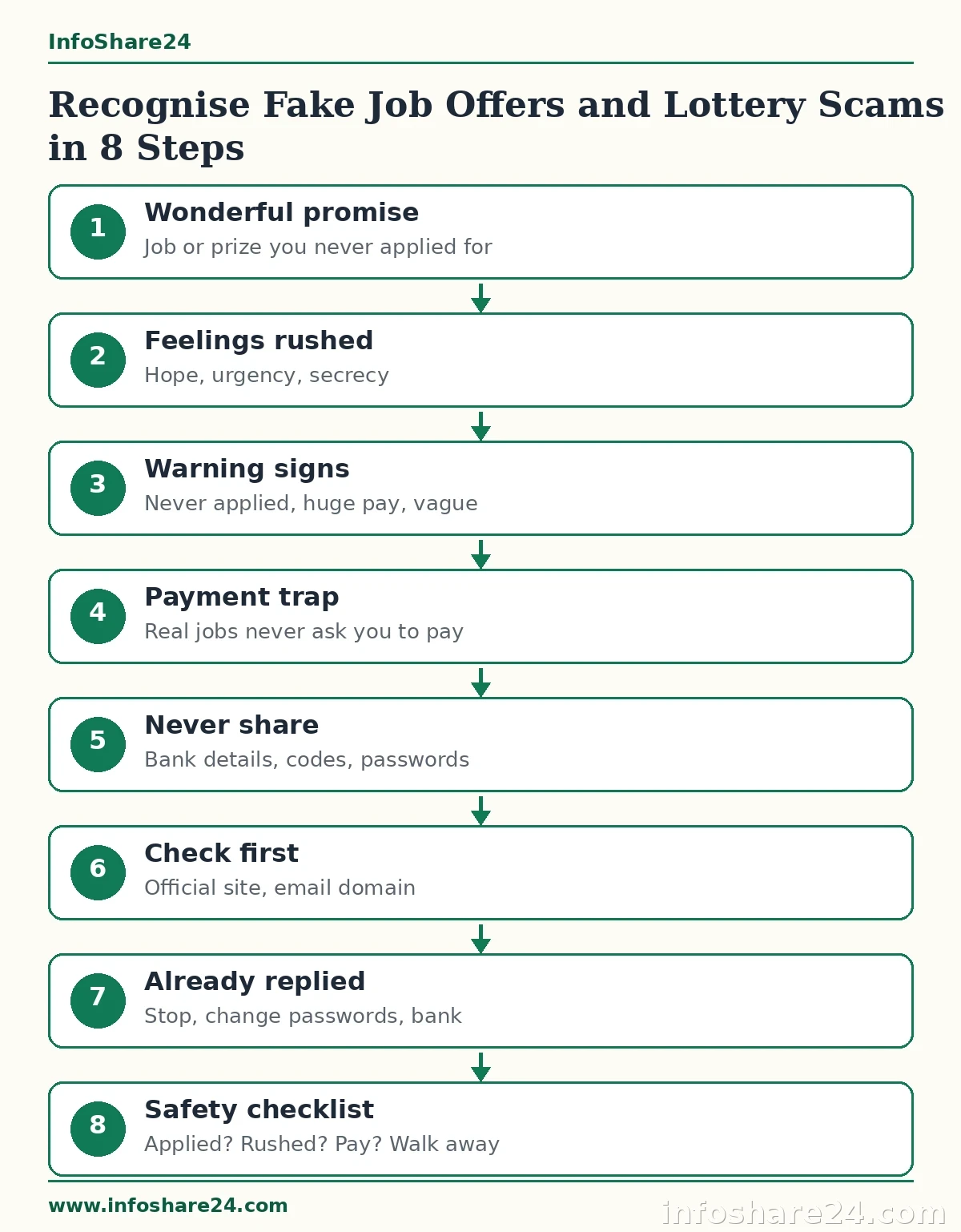
- Scammers understand feelings: a job offer feels like hope when you are looking for work, and a lottery win feels like relief when money is tight.
- They use that hope to rush you, so you reply before you check the facts.
- They also copy the look of real companies. A fake message may use a well-known company name, a professional logo, or a polite, formal tone. That does not make it real. Anyone can copy a logo. The real test is whether the offer can be verified through an independent source. Secrecy is another warning sign: a real employer does not need you to keep a normal job offer secret from your family.
Warning Signs of a Fake Job Offer
Most fake job offers share warning signs. One alone may not prove a scam, but two or three together should make you stop.
- You never applied for the job, yet you are told you have been selected. The salary is far higher than normal, with very little work required.
- The job description is vague, with no clear duties or workplace. The interview is only by chat, with no video call or real discussion of your skills.
- You are hired almost instantly, with no proper application or interview. The sender uses a free email address instead of the company’s official domain. The message is urgent: “Reply today or the offer will go to someone else.”
If you cannot find the job on the official website, treat the offer with great care.
How Lottery Scams Usually Work
- Lottery scams are often even simpler. You are told you have won money, a phone, or a holiday. There is just one problem: you never bought a ticket or entered a competition. You cannot win a lottery you never entered.
- The message may look official, but certificates and reference numbers are easy to fake.
- The scammer then says you must pay a small fee first, called a tax or delivery charge. Once you pay, another fee is often demanded, and then another. In reality, there is no prize. The fees are the whole scam. Real brands do not ask giveaway winners to pay a delivery fee.
The Payment Trap: Why a Real Job Never Asks You to Pay
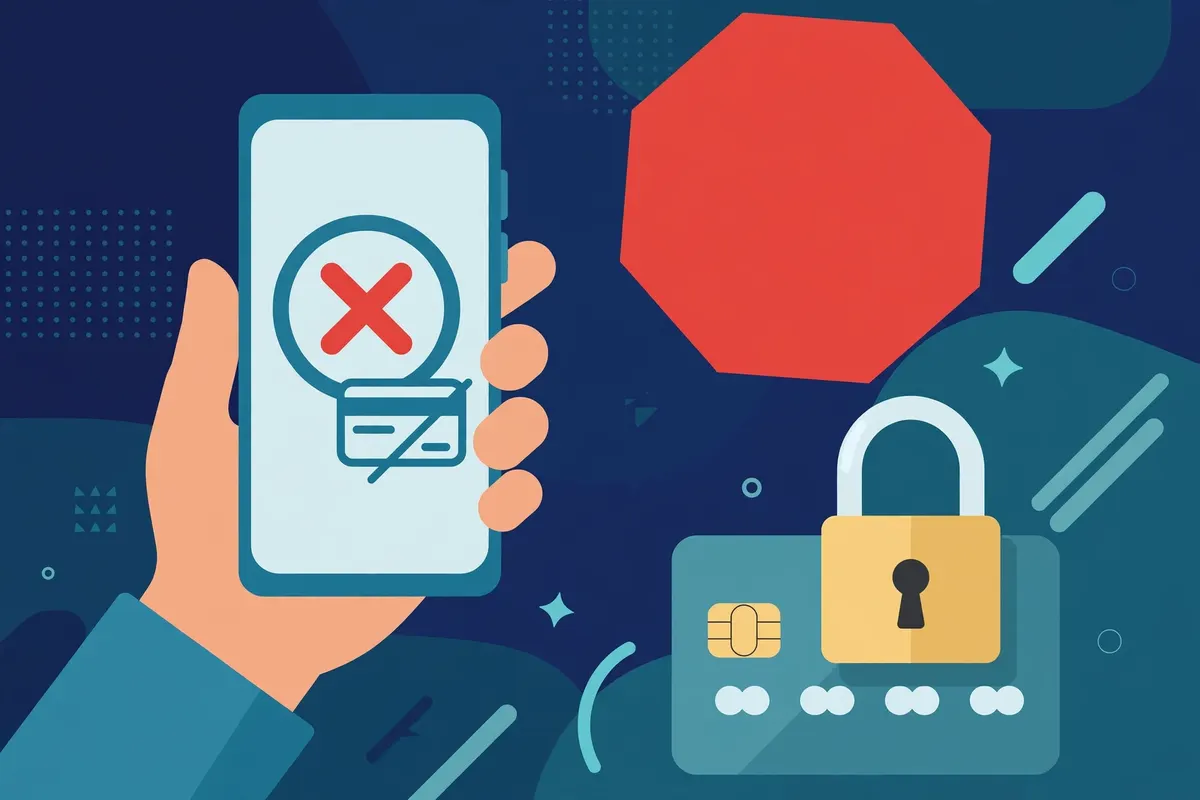
- This is the most important rule in this guide: a real employer never asks you to pay to get a job.
- Never pay for training, a uniform, a work laptop, an activation fee, or a deposit before you start work. If a real company needs equipment or training, it provides them through its normal process. It does not ask a new employee to send money to a personal bank account.
- The same rule applies to prizes. Scammers ask for payment in ways that are hard to reverse, such as a bank transfer or gift card code. If someone rushes you, stop: that urgency is part of the trick.
Never Share Bank Details or Verification Codes
Scammers want personal details too. Never share these with someone who contacted you about a job or a prize:
- Your bank account number, card number, card PIN, or full card details.
- Your online banking password. Any one-time code sent to your phone by text message or an app.
- A photo of your identity card or passport, unless you are completely sure you are dealing with a verified employer through its official process.
A verification code is like a key to your account, and a real company will never ask you to share one by chat or email. Use a strong, unique password for email and banking, as explained in our guide on how to create a strong password you can actually remember.
How to Check an Offer Before You Reply
- Search for the company and the job title yourself, and go to the company’s official website. Do not use only the link in the message. Check whether the job is listed on the official website or a trusted job site.
- Look at the sender’s email address. A real company usually emails from its own domain, not a free email service. Copy a sentence from the message and search for it online. Others may have already reported the same wording.
- Contact the company directly, using official details you find yourself, and ask whether the offer is real. Ask a trusted person for a second opinion.
A genuine opportunity will still be there after you have checked it. A scam depends on you not checking.

What to Do If You Have Already Replied

If you have already replied, do not panic. Act quickly to limit the damage.
- Stop all contact with the sender. Do not send more money to “fix” the situation.
- If you shared a password, change it straight away, and on any other account where you used the same password. If you shared bank or card details, contact your bank immediately.
- If you shared a verification code, change your account password and check for unfamiliar devices. Save the messages and screenshots as evidence, report the scam on the platform, and warn your family and friends.
Learn other common tricks in our guide on how to spot a phishing message in 30 seconds.
A Simple Safety Checklist for Every Offer
- Ask: Did I apply or enter? Is the reward far too good for the effort?
- Am I being rushed or told to keep it secret? Am I asked to pay, or to share bank details or a code?
- Can I find this offer on the official website? If you are asked to pay or share personal details, walk away.
FAQ
Can a real employer ask me to pay for training?
No, not by asking you to send money to a personal account before you start. Training costs for a genuine job are handled by the employer through its normal process.
What if the offer comes from a well-known company name?
Company names are easy to copy. Always verify the offer on the company’s official website or by contacting the company through details you find yourself.
I won a lottery I do not remember entering. Could it still be real?
No. You cannot win a lottery or competition you never entered. If you did not buy a ticket or enter, the message is a scam, however official it looks.
What should I do if a scammer already has my bank details?
Contact your bank straight away, explain what happened, and follow their advice. Then change your passwords, watch your account closely, and report the scam.
Conclusion
These scams promise something wonderful and rush you into acting before you think. Remember: never pay a fee to get a job or a prize, and never share bank details or verification codes with someone who contacted you first. Slow down, check through official channels, and ask a trusted person if unsure. A genuine opportunity will survive a careful check; walking away from a scam protects your money and peace of mind.